Why Harbour Centre matters.
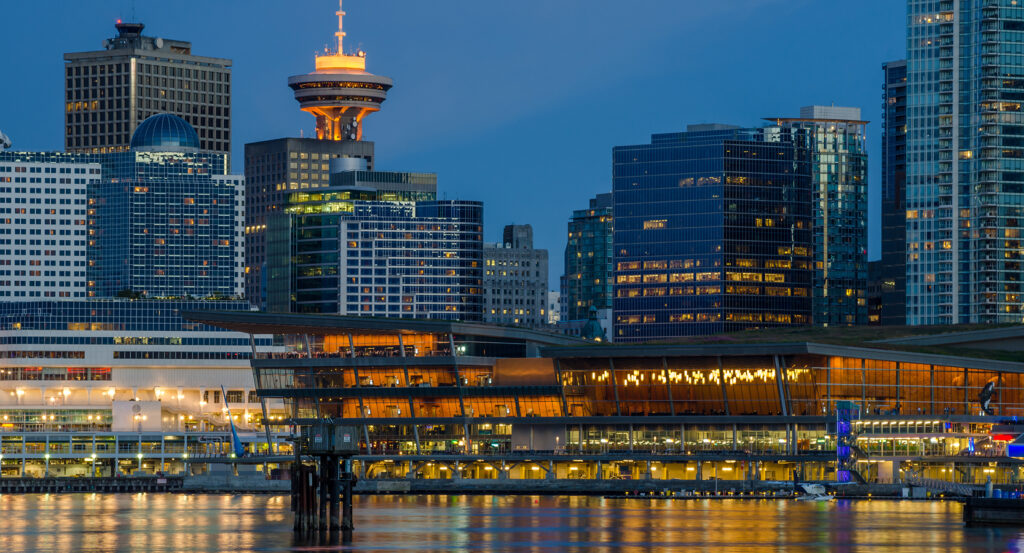
The Harbour Centre in Downtown Vancouver isn't just a skyscraper, it's the city's compass, its vertical landmark where the pulse of the harbour meets the sky.
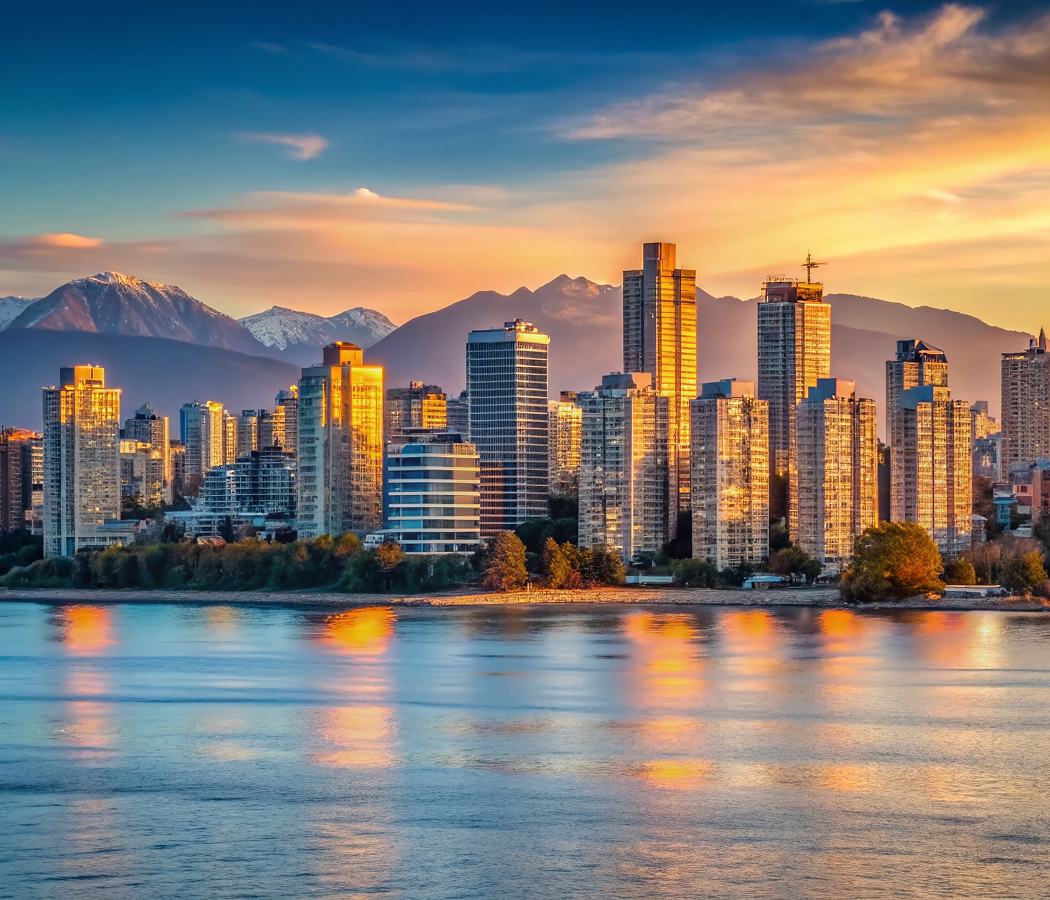
From the street, its circular crown dominates the skyline, a futuristic relic from the 1970s that has aged into a symbol of orientation and perspective. Step inside, and you'll find a microcosm of Vancouver itself: offices, shops, classrooms, and corridors that eventually funnel upward toward its defining feature, the Vancouver Lookout, a 553-foot observation deck that turns every visitor into a cartographer of memory. The elevator ride alone is worth the visit: a glass capsule shooting skyward in forty seconds, the city unfolding beneath you like a time-lapse of light and geometry. When the doors open, it's pure physical elevation, a 360-degree panorama that stretches from Stanley Park to the North Shore Mountains, from False Creek to the Pacific horizon. Below, floatplanes ripple the harbour, freighters glint like jewels, and the city grid hums with quiet order. Up here, you don't just see Vancouver; you understand its structure, its discussion between water, forest, and steel.
What defines Harbour Centre.
The Harbour Centre has been part of Vancouver's character since its opening in 1977, a product of architectural ambition and civic optimism that sought to define a skyline still coming into its own.
Designed by Webb, Zerafa, Menkes, Housden, and Partners, the tower's cylindrical form and rotating restaurant at its crown were inspired by the Space Age aesthetic of the era, a conscious effort to place Vancouver among global cities like Seattle and Toronto, whose observation towers symbolized progress and pride. The Vancouver Lookout, inaugurated by astronaut Neil Armstrong, remains one of the few observation decks in the world personally dedicated by someone who has walked on the moon, a fitting metaphor for perspective and exploration. Over the years, the Harbour Centre has evolved beyond tourism; it now houses Simon Fraser University's downtown campus, technology companies, and media organizations, embedding it deeply into Vancouver's civic fabric. Structurally, the building rises 28 stories, but its reinforced core and crown bring its height to 177 meters, making it among the tallest and most earthquake-resilient towers in British Columbia at the time of its completion. The rotating restaurant, known as Top of Vancouver, completes a full revolution every hour, offering diners a slowly shifting canvas of sea and skyline. The building's façade, a rhythmic grid of concrete ribs and reflective glass, was engineered to withstand both coastal weather and the reflective glare of the ocean, while its base connects seamlessly to the city's underground walkway system and Waterfront Station. In recent years, the Lookout has become more than a viewpoint, it's been reimagined as an educational and cultural venue, hosting Indigenous art exhibitions and historical displays that narrate Vancouver's evolution from Coast Salish territory to modern metropolis. The connection between its original vision of futurism and its renewed commitment to heritage gives Harbour Centre a rare architectural duality, both forward-looking and rooted in place.
How Harbour Centre fits.
A visit to the Harbour Centre is the quickest way to orient yourself to Vancouver, both physically.
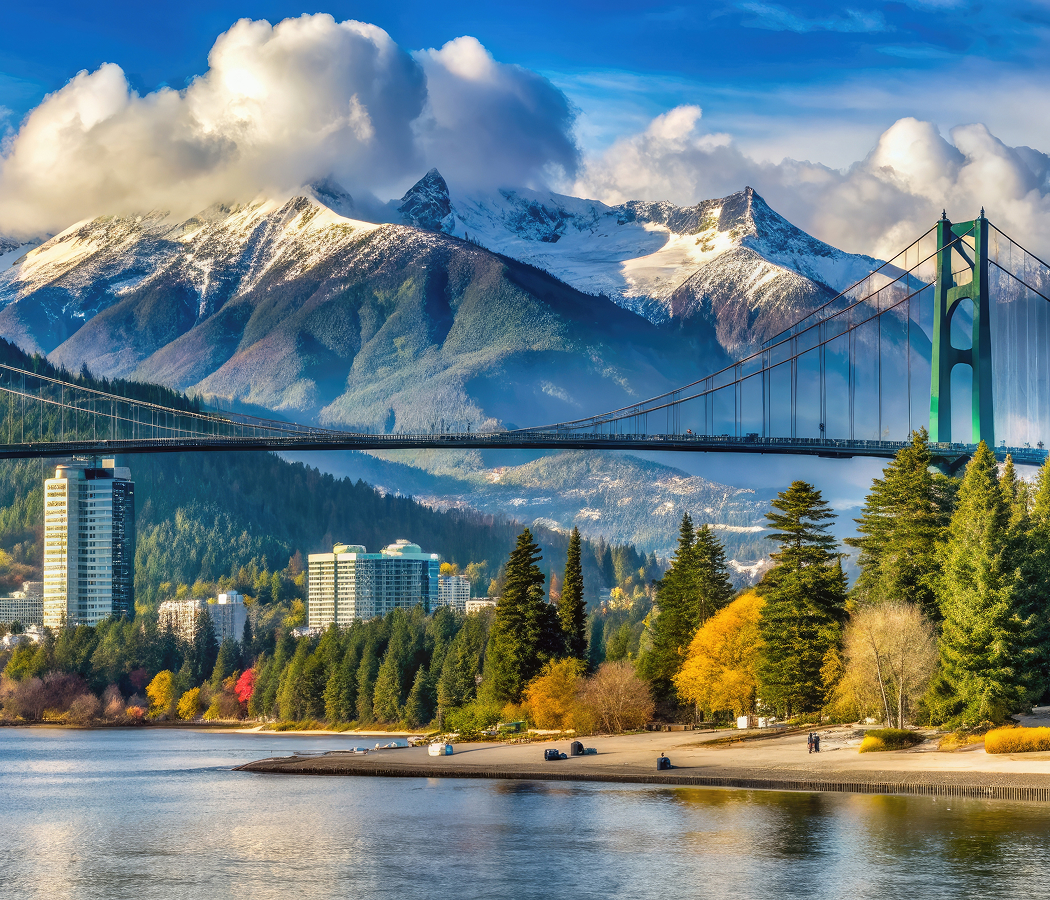
Start at street level on West Hastings Street, where the tower rises from the heart of the financial district. Enter through the Vancouver Lookout lobby and take the glass elevator ride to the top; for many, that 40-second ascent is as exhilarating as the view itself. The best time to visit is either early morning, when the city wakes under soft light, or golden hour, when the skyline catches fire and the mountains turn violet. Allocate 60-90 minutes to experience the deck fully, the panorama shifts as the light moves across the city. Interactive panels describe landmarks below: Gastown's steam clock, Canada Place, Stanley Park, and the Lions Gate Bridge all easily identifiable from above. If you're dining at Top of Vancouver, make a reservation timed to sunset, the restaurant's slow rotation offers the surreal experience of watching day turn to night. Below the tower, the Harbour Centre lobby connects directly to Waterfront Station, linking the Lookout to SkyTrain, SeaBus, and West Coast Express routes, making it an ideal first stop for newcomers or a final vantage point for departing travelers. Don't rush your descent; pause at the observation deck's north-facing windows for one last look at the harbour, the floatplanes landing like dragonflies, and the distant shimmer of the Coastal Mountains. To stand atop Harbour Centre is to see Vancouver as it truly is, not a collection of buildings, but a living landscape where the city's ambition and its geography are forever intertwined.
Where your story begins.
Foresyte Travel reveals places that feel extraordinary long before you arrive.
Experience premium editorial crafted for luxury travelers.