Why Heron Point matters.
Heron Point is a sculpted resort golf course where Sea Pines' Lowcountry landscape character meets Pete Dye's strategic architecture, sharply contoured greens and a multimillion-dollar reconstruction of the community's former Sea Marsh course.
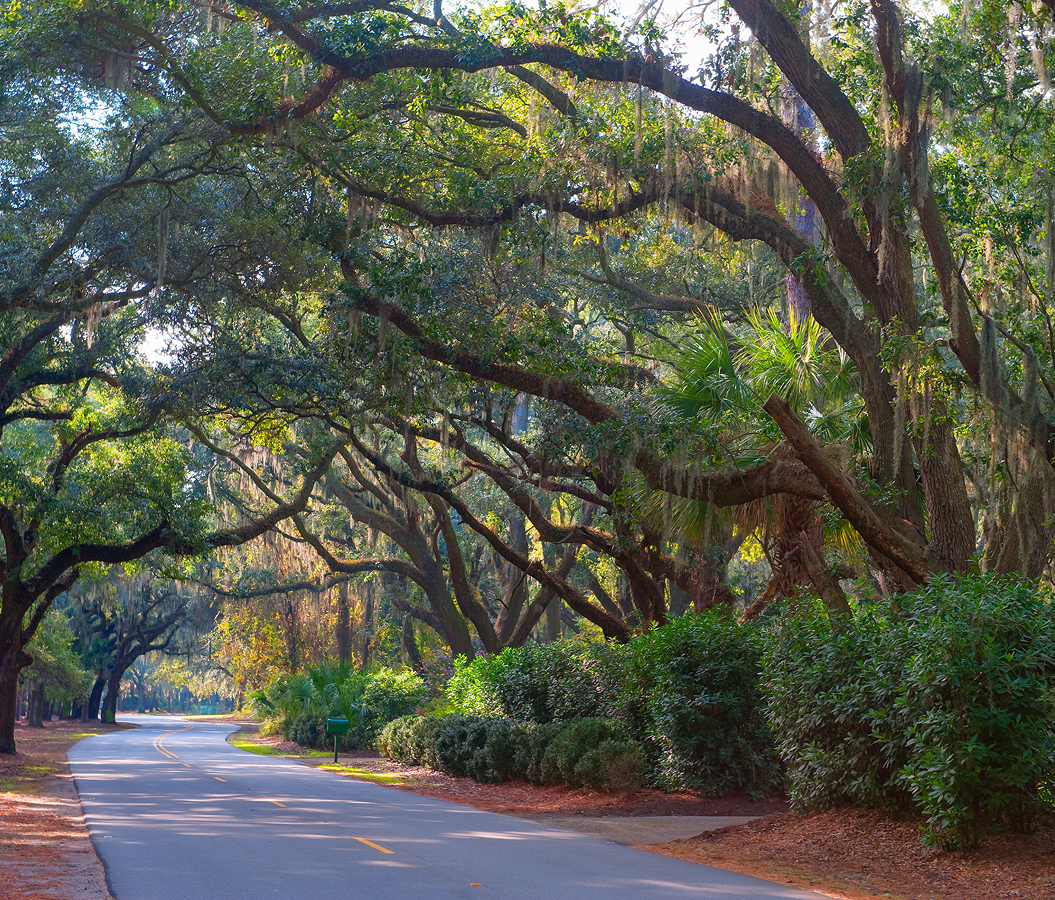
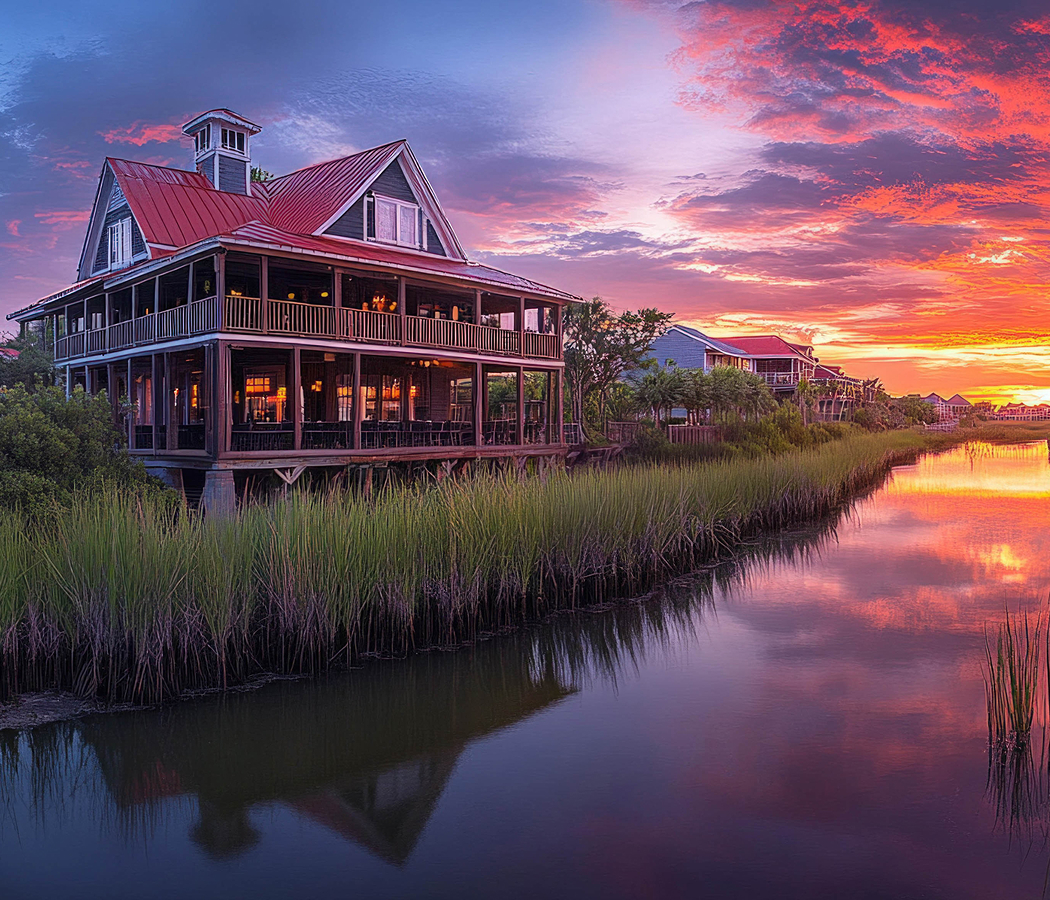
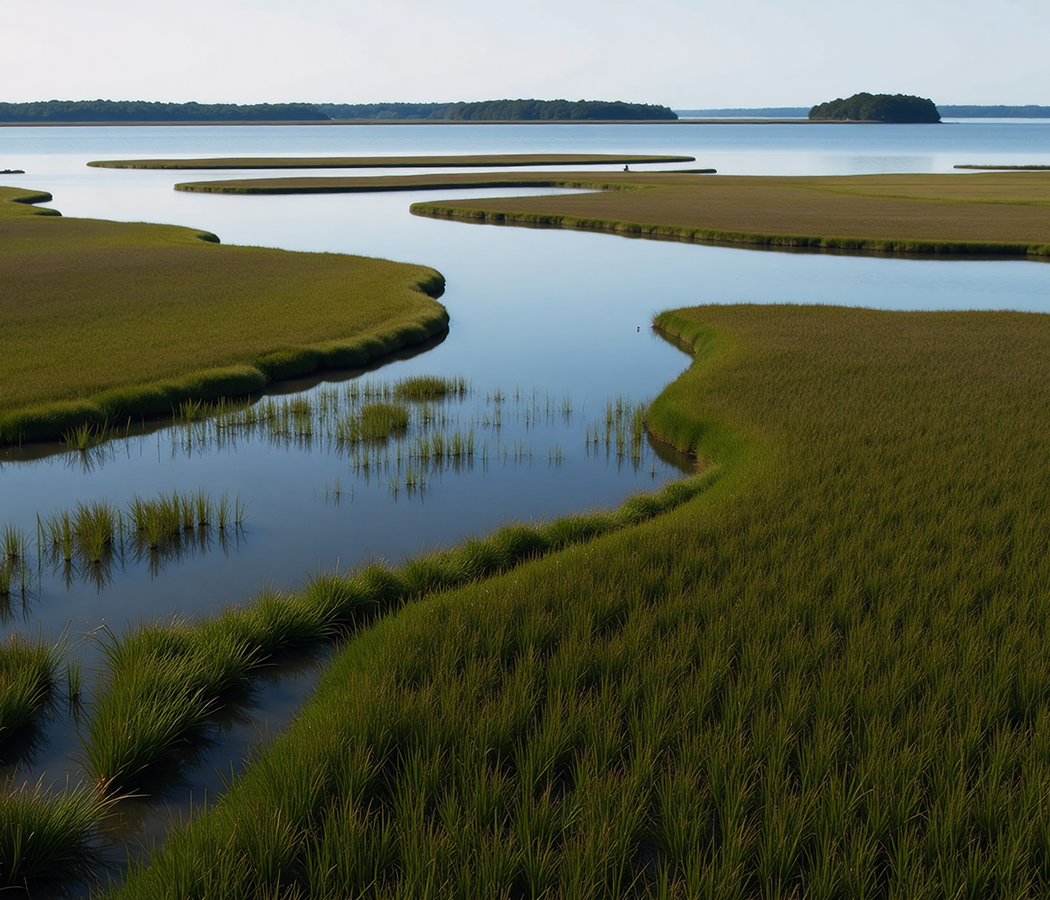
Set along North Sea Pines Drive near Greenwood Drive and just steps from the Sea Pines Plantation Golf Club, the course occupies the interior of southern Hilton Head between the Atlantic shoreline and Calibogue Sound, with Broad Creek defining the island farther north and the tidal reaches of Braddock Cove opening southwest toward Daufuskie Island. Fairways move toward and away from water through a landscape shaped by mounds, swales and shifting ground contours, making angle selection visible from the tee. Small undulating greens intensify that geometry through bunkers, water and closely shaped surrounds. Long and short holes repeatedly alternate the strategic demands, giving restraint and attack distinct advantages according to pin position and hazard placement. The result is a resort course whose manufactured elevation, angled fairways, compact greens and Lowcountry water hazards turn comparatively flat island terrain into a sequence of strategic decisions.
What defines Heron Point.
Heron Point by Pete Dye is best known for the multimillion-dollar 2007 reconstruction that transformed Sea Pines' original Sea Marsh course into a substantially different Pete Dye layout. Dye and his associates reshaped the existing fairways through pronounced mounding and hillocks, redirected playing angles around hazards and rebuilt green complexes around small, undulating putting surfaces. The project belonged to a much longer relationship between Dye and Sea Pines, where his work helped make strategic golf architecture central to the resort's development. Heron Point emerged as an 18-hole, par-72 course stretching beyond 7,000 yards from its longest configuration, giving Dye sufficient length to alternate demanding drives with shorter holes structured around positional choices. Further work in 2014 returned Dye's firm to the layout, this time concentrating on greater playability: green surrounds and contours were softened, several putting surfaces were enlarged, ornamental landscape beds were added and the greens were converted to TifEagle bermudagrass. Golf Magazine placed the course at 11th in South Carolina in its 2014 “Best Courses Near You” recognition, and its conservation program led to designation as an Audubon Cooperative Sanctuary. The successive interventions left Heron Point neither as a preserved midcentury course nor as a static 2007 redesign, but as a Dye layout subsequently adjusted by his own firm to broaden playability.
The opening hole immediately introduces Dye's use of asymmetric pressure, placing bunker and water along the right side of a par four and making the right-center fairway the preferred route toward a green defended again on that side. The second compresses the challenge into a short par four where a long iron or hybrid leaves a short approach to an elevated green, exchanging raw distance for position. Across the course, mounds and swales frame target areas as fairways repeatedly bend toward and retreat from hazards, turning the ground itself into directional information. Water-guarded greens reinforce the consequence of approach angle, and the smaller putting surfaces preserve precision after the wider strategic decisions made from the tee. The 2014 enlargement of selected greens and softening of their surrounds moderated the most severe demands without flattening those relationships between position, hazard and approach. Heron Point reveals Dye's architecture through decisions accumulating across the hole: tee placement determines angle, angle governs access to the green and the green complex determines how severely an imprecise approach is punished.
How Heron Point fits.
Heron Point works as the anchor for a Sea Pines outing connecting prehistoric occupation of Hilton Head, the plantation landscape preceding resort development and Charles Fraser's creation of a maritime focal point for the community.
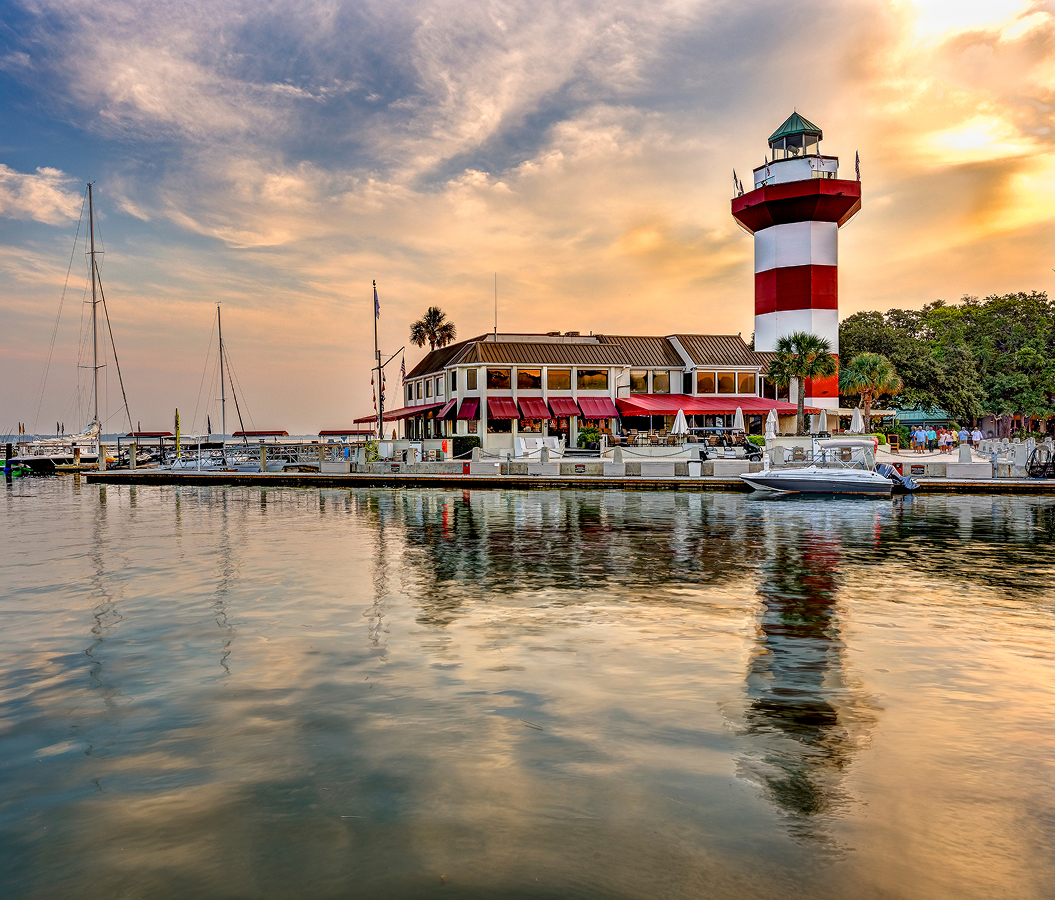
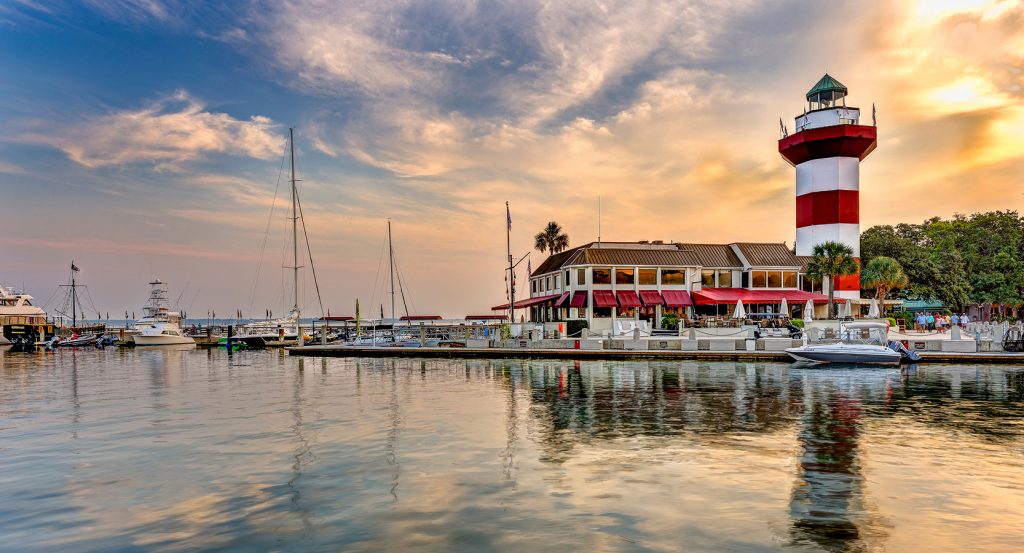
Begin at Sea Pines Forest Preserve, where Charles and Joseph Fraser filed covenants in 1970 dedicating more than 600 acres to wildlife habitat and outdoor recreation before the preserve formally opened on June 1, 1971. The protected tract carries a human history extending thousands of years deeper through the Sea Pines Shell Ring, an archaeological site formed 4,800 years ago and now listed on the National Register of Historic Places. Its shell mound spans 200 feet, preserving physical evidence of Indigenous occupation inside land later crossed by eighteenth-century rice fields and incorporated into the Fraser family's conservation plan for Sea Pines. Continue to Stoney-Baynard Ruins, where surviving tabby walls preserve Braddock's Point Plantation, a 1,000-acre property developed by the Stoney family near the turn of the nineteenth century and purchased by William Eddings Baynard in 1845 for $10,000. The main structure used tabby made from shell, lime, sand and water, and associated remains include a chimney footing and the foundation of a dwelling occupied by enslaved people. Union troops occupied the property during the Civil War, the residence burned during the 1860s and the Baynard heirs later redeemed much of the confiscated estate in 1875, leaving the ruins as one of Sea Pines' strongest surviving links to the plantation economy that preceded modern Hilton Head. Conclude at Harbour Town Lighthouse, conceived by Sea Pines founder Charles Fraser as the visual beacon for a harbor village inspired partly by Portofino. Construction of the 90-foot striped tower began in 1968 but missed the inaugural Heritage Classic in 1969; completion followed in 1970, with 114 steps eventually carrying visitors through an interior museum to the top. Fraser simultaneously insisted that Harbour Town Yacht Basin preserve a centuries-old live oak, accepting the complications of building the marina around the tree as part of his broader approach to Sea Pines. The progression moves from Indigenous occupation preserved within a protected forest through the tabby remains of Hilton Head's plantation period and culminates in Fraser's purpose-built lighthouse, tracing the transformation of southern Hilton Head from ancient settlement and agricultural land into the conservation-minded resort community surrounding Heron Point.
Where your story begins.
Foresyte Travel reveals places that feel extraordinary long before you arrive.
Enjoy editorial crafted for luxury travelers.
Foresyte may earn a commission when you book.