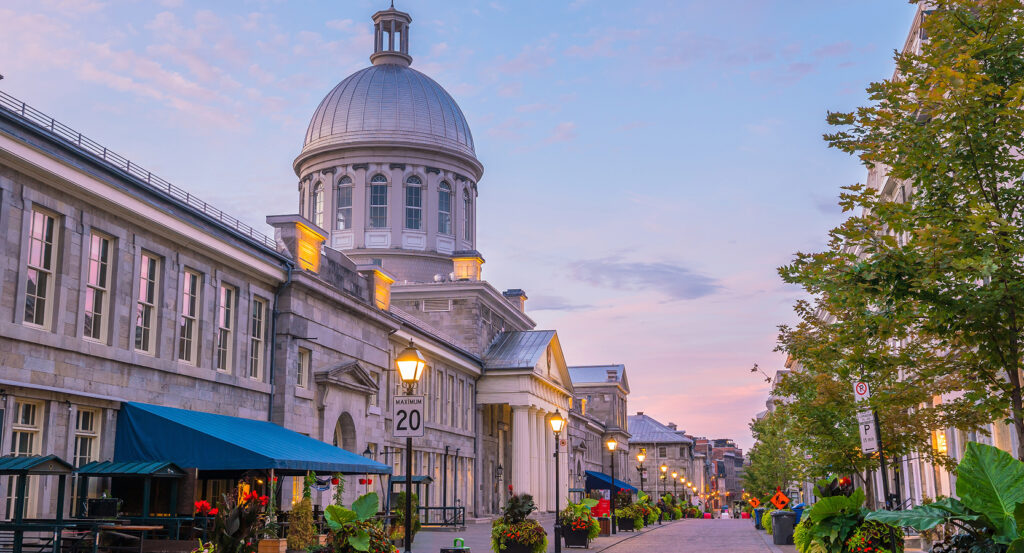
Why you should experience Montréal Underground City in Montréal, Canada.
Montréal Underground City is among the most ambitious urban infrastructure systems ever built, where shopping, transportation, culture, and daily life converge beneath the streets of a city shaped by extreme winters and relentless innovation.
Connected shopping centers, office towers, transit stations, hotels, universities, performance venues, food halls, and pedestrian corridors create a vast underground network that balances practicality with urban complexity. Developed gradually beginning in the 1960s, the system emerged as planners sought to connect key destinations while protecting residents and visitors from harsh winter conditions. Over time, new developments expanded the network into a sprawling subterranean city that became woven into everyday life. Today, millions of people use its corridors each year to move between destinations. Visitors encounter a hidden dimension of Montréal that feels both futuristic and distinctly local. To the south, Ville-Marie's skyline, cultural institutions, and commercial core sit directly above much of the network, highlighting how the underground city functions as an extension of the borough itself. Every passageway, concourse, and public space reflects a city shaped by ingenuity, connectivity, and adaptation.
What you should know about Montréal Underground City.
Montréal Underground City is best known for being the largest underground pedestrian network in the world.
Known locally as RÉSO, the system stretches across dozens of kilometers of interconnected tunnels, passageways, and public spaces linking major destinations throughout Downtown Montréal. The network connects office buildings, hotels, shopping centers, metro stations, universities, cultural venues, and residential developments into a single integrated urban environment. Its scale and complexity transformed the way people navigate the city, particularly during the winter months when temperatures can become severe. Urban planners and architects around the world frequently study the system as a pioneering example of climate-adaptive infrastructure. The network continues to expand and evolve as new developments are added to Downtown Montréal. Few urban environments anywhere possess such a remarkable integration of transportation, commerce, and public life beneath the surface.
How to fold Montréal Underground City into your trip.
Montréal Underground City works as an exploration of the interconnected spaces that reveal how infrastructure can shape the character of an entire city.
Begin at Place Ville Marie, where the network's defining relationship with commerce, architecture, and urban development immediately comes into focus. Continue toward Complexe Desjardins, whose shopping, dining, and public gathering spaces reveal how the underground city functions as a living extension of Downtown Montréal. From there, make your way to Eaton Centre Montréal, where retail corridors and direct transit connections provide a broader perspective on the scale and convenience that distinguish the network. Along the route, you'll encounter metro stations, public art installations, office towers, cultural venues, shopping arcades, food halls, and pedestrian passages that showcase the system's extraordinary reach. Together, these destinations reveal how Montréal Underground City evolved into one of the world's most innovative examples of integrated urban design.
Where your story begins.
Foresyte Travel reveals places that feel extraordinary long before you arrive.
Experience premium editorial crafted for luxury travelers.