Why Red Door Bistro matters.
Red Door Bistro is an intimate French bistro where Whistler Creekside's old-school mountain character meets classical technique, British Columbia ingredients and chef RD Stewart's decades in the resort's defining kitchens.
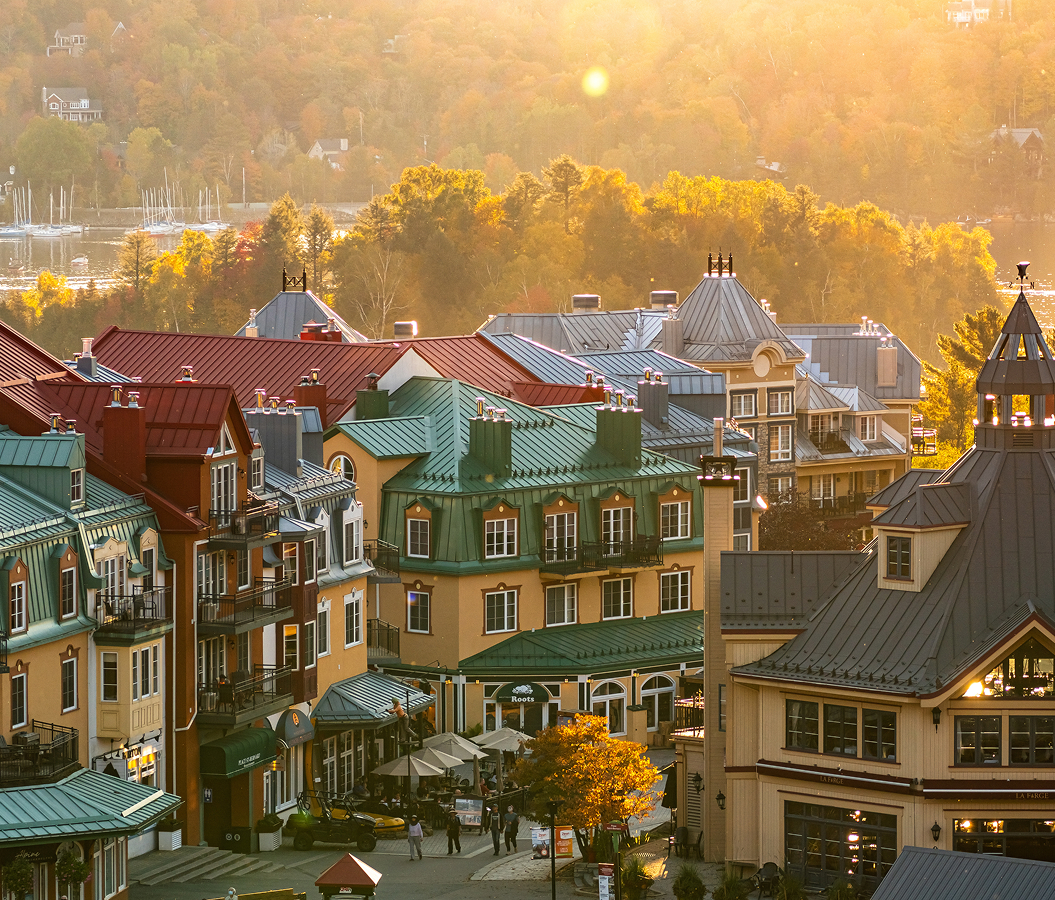
Set along Lake Placid Road near the Creekside commercial core and just east of Nita Lake, the restaurant occupies a discreet ground-floor position between the lakefront, Whistler Mountain's southwestern slopes and the compact village that developed around the resort's original ski base. A 40-seat dining room keeps tables close together beneath timber detailing and subdued lighting. The restrained interior establishes a distinctly smaller scale than Whistler's large hotel restaurants, with the dining room concentrated around a single evening service. Creekside's steep mountain wall rises immediately east of the surrounding blocks, giving the restaurant a physical relationship with the terrain that launched Whistler's ski industry. The result is a compact bistro whose scale, established local ownership and mountain setting preserve a particularly personal strand of Whistler dining.
What defines Red Door Bistro.
Red Door Bistro is best known for joining restaurateur Karen Roland with chef RD Stewart after both had already spent decades building careers in Whistler hospitality. Roland arrived in Whistler in October 1988 at age 20 for a single ski season and joined Ron “Hoz” Hosner's Florentyna's as a hostess in December 1993 before moving into Hoz's Pub as a server, bartender and bookkeeping assistant. When Hosner prepared to sell in 2007, Roland persuaded her parents to help acquire the operation and took control on May 1, 2008. The adjoining restaurant initially became a barbecue concept, but five years without sufficient commercial traction prompted Roland to approach Stewart during summer 2013 about rebuilding it. Stewart had graduated from George Brown Hospitality and Culinary College, staged at Whistler restaurants including Trattoria and Il Caminetto di Umberto, developed his cooking at La Rua Restaurante and worked at Okanagan wineries including Quail's Gate, Nk'Mip and Burrowing Owl. He later returned to Whistler as executive sous chef at Araxi, adding one of the resort's most influential fine-dining kitchens to his background before creating Red Door Bistro. A modest renovation transformed Roland's restaurant space, and Red Door Bistro opened in 2013 with Stewart directing a French-influenced West Coast kitchen. The Restaurant Association of Whistler subsequently inducted Stewart and Roland into its Hall of Fame, placing their partnership within the professional history of the resort where both had spent much of their careers.
French technique gives the present menu its structure, with British Columbia and Pacific ingredients repeatedly altering familiar bistro forms. West Coast bouillabaisse combines prawns, mussels, scallops and fresh fish in tomato, fennel and saffron broth, finished with piquillo pepper aioli and grilled baguette. Duck confit enters crisp spring-roll pastry with carrot and mushroom duxelles before pickled ginger, roasted garlic purée and red currant sauce introduce sharper contrasts. Hokkaido scallops are butter-seared against celery-root purée, lemon dumplings, Pink Lady apple, pistachios and apple balsamic. Sakura pork pairs prosciutto-wrapped tenderloin with sriracha-glazed belly, apple butter, sour mustard sauce and chicharrons, building several textures from the same protein. Braised short ribs remain closer to French comfort cooking through red-wine and herb-marinated beef, potato pavé and concentrated braising jus, and steak frites uses marinated bavette with rosemary fries, chimichurri and roasted garlic aioli. B.C. salmon brings Tofino king salmon together with beluga lentils, apple-fennel coleslaw and sauce vierge, placing regional seafood inside a Mediterranean-derived preparation. Red Door Bistro's cooking gains its distinction through this repeated movement between classical French foundations and ingredients drawn from British Columbia and the Pacific coast.
How Red Door Bistro fits.
Red Door Bistro works as the evening anchor for an outing connecting Whistler's earliest municipal lakeside recreation project, the institution preserving the resort's transformation from Alta Lake settlement to international ski destination and a cultural center created jointly by the Squamish and Lil'wat Nations.
Begin at Alpha Lake Park, whose municipal history reaches to 1982, when Whistler acquired lakeside property from John Taylor despite an earlier recreation plan giving higher priority to warmer Alta and Lost lakes. Taylor owned more than 160 acres around Alpha and Nita lakes and had previously built the valley's first tennis courts at Jordan's Lodge, where the Whistler Tennis Club formed in 1978. The municipality developed the acquired shoreline into a public park, extending civic recreation into the southern valley as Creekside continued expanding around Whistler Mountain's original base. Continue to Whistler Museum, where the community's history stretches from the Pemberton Trail and early settlement through railway access, resort construction and Olympic ambition. The area was known as Summit Lake before adopting Alta Lake 1910, and the arrival of the Pacific Great Eastern Railway in 1914 strengthened its connection with the coast. Garibaldi Lifts Limited began developing Whistler Mountain during the 1960s, installing a gondola, chairlift and T-bars before the ski area officially opened on January 15, 1966. The museum preserves that transition from isolated lake community into a purpose-built mountain resort through artifacts, photographs and archival collections assembled in the valley itself. Conclude at Squamish Lil'wat Cultural Centre, created through a partnership between the Squamish Nation and Lil'wat Nation to present two distinct Indigenous cultures within a building designed around their architectural traditions. The project brought the peoples whose traditional territories meet around Whistler into a jointly operated cultural institution containing exhibitions, carving, weaving, performance and language. Its architecture draws from the Squamish longhouse and Lil'wat Istken, placing different building traditions within a shared complex. The progression moves from municipal stewardship of the southern valley through the institution preserving Whistler's extraordinary resort transformation and culminates in the Squamish and Lil'wat Nations presenting the deeper cultural histories of the territory itself.
Where your story begins.
Foresyte Travel reveals places that feel extraordinary long before you arrive.
Enjoy editorial crafted for luxury travelers.
Foresyte may earn a commission when you book.