Why Michael Lee-Chin Crystal matters.
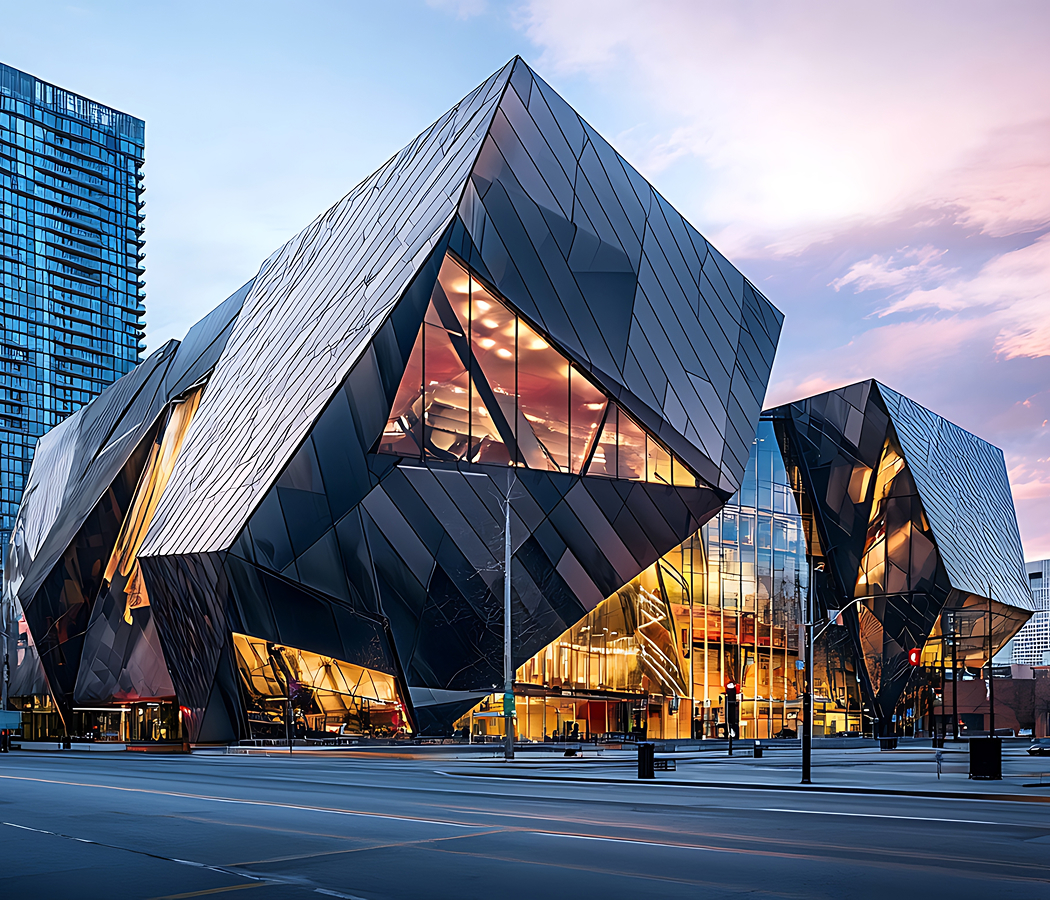
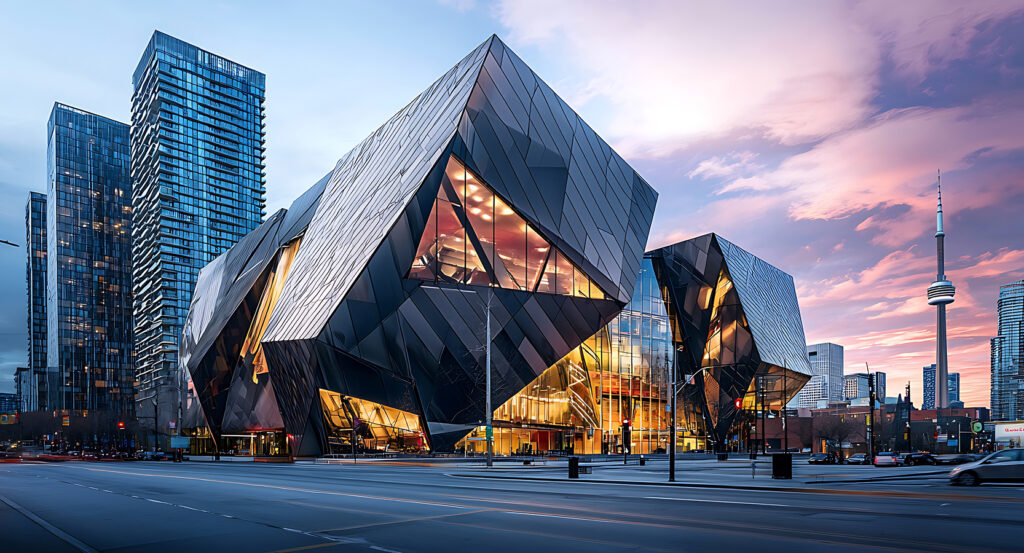
Michael Lee-Chin Crystal at Royal Ontario Museum, or ROM, is one of Toronto's most striking architectural landmarks, a daring fusion of glass, steel, and imagination that redefined the museum's identity.
Designed by architect Daniel Libeskind, the angular structure bursts from the museum's historic façade like a modern shard of ice, symbolizing the intersection of old and new. Walking beneath its sharp lines and reflective planes feels like stepping into a living sculpture, one that refracts the city's energy in every direction. Inside, the Crystal's soaring galleries showcase rotating exhibitions of art, culture, and natural history, creating an immersive experience where the building itself becomes part of the storytelling. Whether viewed from Bloor Street or explored from within, the Crystal radiates ambition, a bold architectural conversation piece that mirrors Toronto's global confidence and creative soul.
What defines Michael Lee-Chin Crystal.
Unveiled in 2007, Michael Lee-Chin Crystal was named after Jamaican-Canadian philanthropist Michael Lee-Chin, whose $30 million donation sparked the ROM's transformation project.
The design, inspired by the museum's mineral collection, was intended to represent crystals growing out of the earth, a metaphor for discovery and expansion. Constructed from 25% glass and 75% aluminum, its five interlocking volumes hold more than 175,000 square feet of space, including galleries, event halls, and the museum store. While controversial at first, the Crystal has since become one of the city's most photographed structures, often lit in dramatic colors at night to mark civic celebrations. Beyond its visual impact, the building was engineered with remarkable precision: no two panes of glass are alike, and the steel beams interlock at impossible angles. The result is a triumph of geometry and vision, a structure that literally changed the way people see the ROM, both inside and out.
How Michael Lee-Chin Crystal fits.
Begin your visit to the Royal Ontario Museum by entering through the Crystal's main atrium, where natural light pours through faceted windows and the building's grand staircase rises dramatically overhead.
Take a moment to admire how the Crystal connects to the original 1914 façade, an intentional contrast that invites reflection on the evolution of art, science, and culture. Explore the galleries within the Crystal, which often host contemporary exhibitions that contrast beautifully with the museum's ancient artifacts. For architecture lovers, the “ROM Walks” guided tours offer behind-the-scenes insights into Libeskind's design process and construction challenges. When you step back outside, linger on Bloor Street West to capture the Crystal's most iconic angle, its metallic surfaces glinting against Toronto's skyline. For a memorable finale, return at sunset when the structure glows gold and silver, turning this architectural marvel into a living, breathing part of the city's light.
Where your story begins.
Foresyte Travel reveals places that feel extraordinary long before you arrive.
Enjoy editorial crafted for luxury travelers.
Foresyte may earn a commission when you book.