Why The Westin Ottawa matters.
The Westin Ottawa is a central capital hotel where Downtown Ottawa's governmental landscape meets the Rideau Canal, parliamentary history and the city's expanding culture of commerce, shopping and public life.
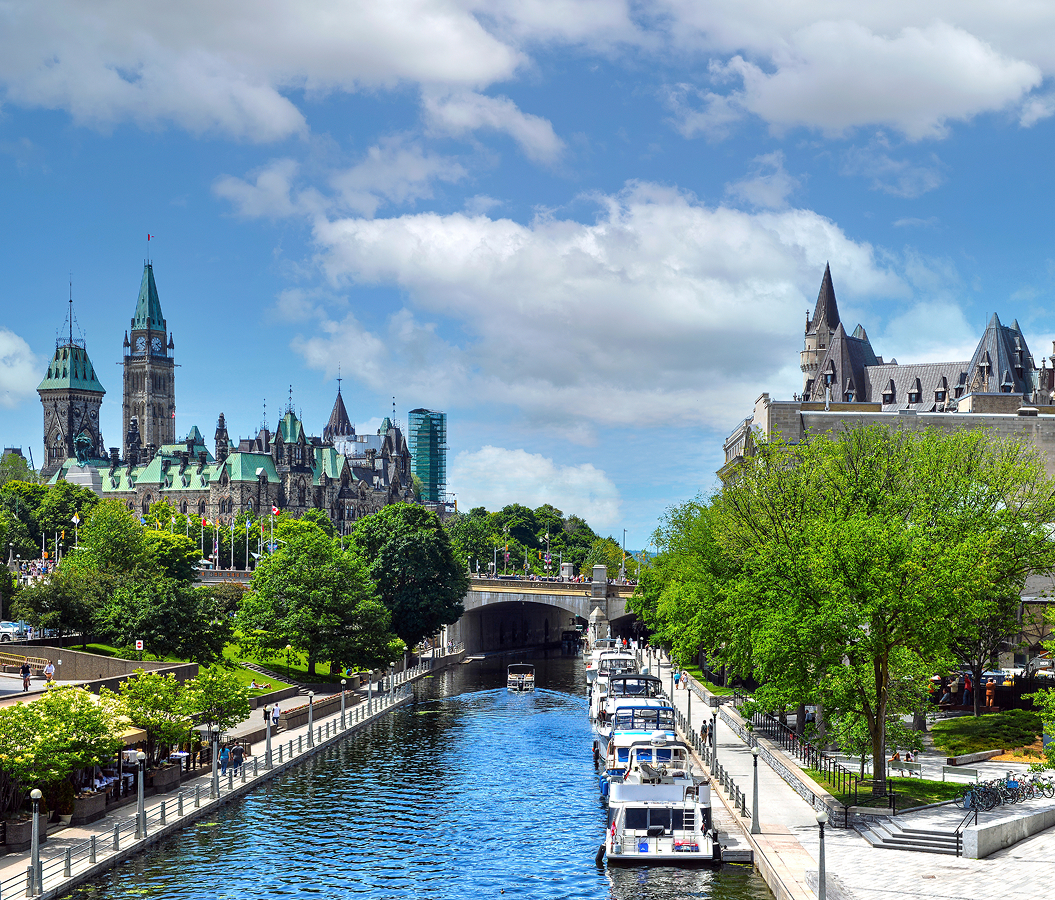
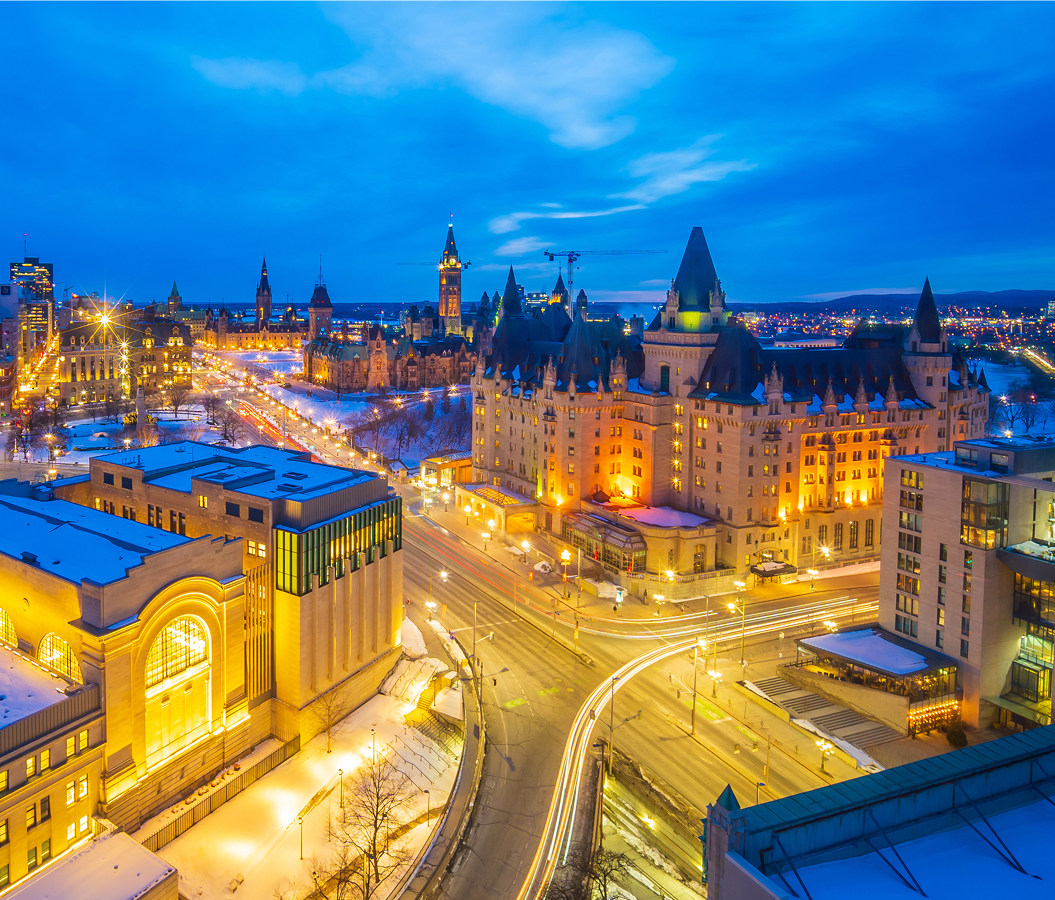
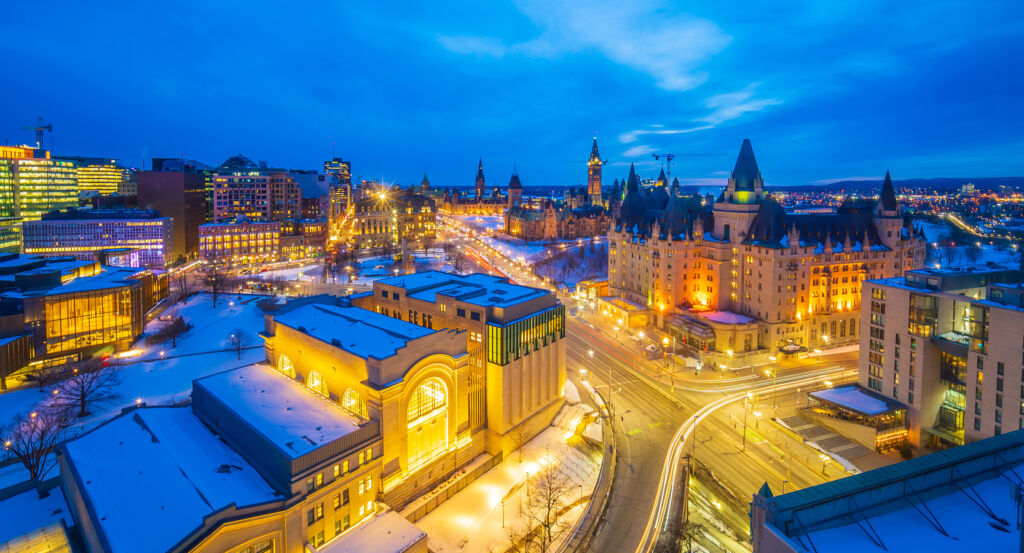
Set along Colonel By Drive beside the Rideau Centre and the Rideau Canal, The Westin Ottawa stands between Parliament Hill, the National Arts Centre, ByWard Market and the University of Ottawa, with the Ottawa River and Gatineau Hills extending beyond the capital's eastern skyline. Its distinctive physical setting combines a major urban hotel, a covered shopping complex and a historic waterway within one compact downtown district, placing retail, government, culture and recreation directly beside one another. The city is encountered primarily through movement from the hotel into the Rideau Centre, onto the canal paths and through the streets leading toward Parliament Hill, museums, markets and the riverfront. A second atmosphere develops inside the hotel through restaurants, lounges, guest floors, fitness spaces and event rooms that provide a polished refuge from Ottawa's seasonal weather and active civic center. The result is an exceptional urban base whose architecture and position connect everyday accommodation with the capital's parliamentary, commercial and canal-centered identity.
What defines The Westin Ottawa.
The Westin Ottawa is best known for its central role in the Rideau Area Project, a landmark urban redevelopment initiative that transformed Downtown Ottawa's commercial district and established a major new connection between the national capital's hospitality, retail, and convention industries. The undertaking emerged during the 1970s, when suburban shopping centres and the relocation of federal government offices to Hull had weakened the commercial vitality of Rideau Street. Municipal, provincial, and federal authorities joined private developers in pursuing an integrated development capable of attracting substantial retail investment and international business activity to the historic city centre. The partnership brought together interests associated with the Eaton Company, Toronto real estate firm J.J. Barnicke, Citicom, the National Capital Commission, and the regional municipality of Ottawa-Carleton. Architect David McRobie contributed to the project's complex urban planning, coordinating a development whose commercial components required extensive negotiation between public institutions and private investors. The resulting scheme united the Rideau Centre shopping complex, Ottawa Congress Centre, and a major Westin hotel within an interconnected metropolitan development. The Rideau Centre opened in March 1983, introducing a substantial new retail destination that strengthened Downtown Ottawa's position within the regional shopping economy. The Westin Ottawa followed on October 12, 1983, completing a $60 million hotel development overlooking the Rideau Canal and reinforcing the commercial importance of the surrounding district. Its inauguration introduced a major international hospitality institution to an area already distinguished by Parliament Hill, the Château Laurier, and Ottawa's principal governmental and cultural establishments. The adjoining Ottawa Congress Centre strengthened the development's institutional significance through facilities designed for major conventions and exhibitions, bringing a substantial new concentration of professional gatherings into the capital's commercial centre. Former Prime Minister Pierre Elliott Trudeau participated in celebrations associated with the development, reflecting the project's importance within the broader modernization of Downtown Ottawa. The complex became an influential example of integrated urban redevelopment, demonstrating the commercial potential of coordinating international hospitality, regional retail, and large-scale convention infrastructure. Subsequent changes to the surrounding district reinforced this relationship, particularly the transformation of the original congress centre into the contemporary Shaw Centre, whose expansion strengthened Ottawa's international conference industry. In 2015, the hotel's ownership advanced plans for a substantial new banquet facility on an upper-level terrace, extending its established relationship with the capital's ceremonial and convention economy. A further investment program announced in September 2025 introduced renovations to the property's interiors, reflecting continued confidence in Downtown Ottawa's hospitality market. The Westin Ottawa represents a defining chapter in the revitalization of the national capital's commercial centre, connecting the urban planning ambitions of the early 1980s with the continuing development of Ottawa's international convention and hospitality industries.
The hotel's architectural character develops through its unusual integration with the surrounding civic landscape, establishing a continuous relationship between Downtown Ottawa's commercial infrastructure and the ceremonial geography of Canada's capital. The original twenty-four-storey tower introduced a substantial modernist presence beside the Rideau Canal, complementing the historic Châteauesque architecture of the nearby Fairmont Château Laurier through a distinctly contemporary architectural language. Its elevated position creates expansive perspectives across the canal's northern reaches, where the waterway approaches the Ottawa River through the expansive flight of locks beneath Parliament Hill. The Rideau Canal's designation as a UNESCO World Heritage Site in 2007 strengthened the cultural significance of this setting, recognizing the nineteenth-century engineering achievement that connected Ottawa with Kingston and the Great Lakes. The hotel's western outlook incorporates the Gothic Revival architecture of Parliament Hill, including the Peace Tower, whose commanding silhouette establishes one of Canada's most recognizable national landmarks. Its eastern orientation connects the building with the historic ByWard Market district, extending the surrounding urban landscape into a commercial neighborhood shaped by nearly two centuries of trade and public gathering. The architectural composition also incorporates an elevated connection to the Shaw Centre, creating an important physical relationship between the hotel's hospitality functions and the capital's principal convention infrastructure. This arrangement supports Ottawa's distinctive concentration of diplomatic gatherings, government conferences, and international institutional events, connecting the property with the professional culture of the national capital. The Shaw Centre's contemporary architectural identity, developed by Brisbin Brook Beynon Architects and Ritchard Brisbin, introduces an expansive glass façade whose curving form reflects the nearby canal and surrounding civic buildings. Its public interiors incorporate Canadian artistic commissions and regional design references, extending the broader complex's relationship with national cultural identity. The hotel's culinary program develops another dimension of Ottawa's international character through Daly's Restaurant, whose name recalls the historic Daly Building that once occupied a prominent position near the Rideau Canal. The restaurant's contemporary Canadian cooking draws upon regional ingredients and established breakfast traditions, connecting the property's dining culture with the agricultural and culinary heritage of eastern Ontario and western Québec. The Shore Club introduces a complementary interpretation of Canadian hospitality through a seafood and steakhouse concept associated with Ottawa's formal business and political dining culture. Its emphasis on carefully prepared seafood, premium beef, and classical restaurant service reflects the city's longstanding role as a gathering place for national and international decision-makers. Together, the hotel's canal-facing architecture, integration with the capital's convention infrastructure, and connection to Ottawa's civic and culinary traditions establish a distinctive hospitality character rooted in the institutional geography of Canada's national capital.
How The Westin Ottawa fits.
The Westin Ottawa works as the starting point for an exploration connecting Canada's parliamentary identity, Ottawa's canal-centered geography and the cultural institutions that define the capital's public character.
Begin at Parliament Hill, the expansive federal precinct where Gothic Revival buildings, ceremonial grounds and the Peace Tower establish the architectural and political center of Ottawa. The complex rises above the Ottawa River and frames the capital's principal civic landscape through stone façades, landscaped lawns, public ceremonies and views toward Gatineau. Its buildings and grounds connect Canada's national government with the city's broader history of planned boulevards, riverfront development and public symbolism. Continue to National Gallery of Canada, the major cultural institution where Canadian, Indigenous and international art occupies a glass-and-granite building overlooking the Ottawa River and Parliament Hill. Its galleries, sculpture courts and architectural volumes provide a counterpoint to the formal government district, creating a setting where national character is explored through painting, sculpture, photography, design and contemporary practice. The museum's location links the capital's political center with the cultural institutions gathered around Sussex Drive and the northern edge of downtown. Conclude at ByWard Market, the historic market district where food stalls, restaurants, shops, galleries and nightlife occupy the streets east of Parliament Hill and north of Rideau Street. Established in the nineteenth century, the market developed around public commerce and remains one of Ottawa's most active pedestrian districts. Its restaurants, produce vendors, public art and historic streets reveal the city's social and commercial life beyond the federal precinct. The progression moves from Parliament Hill's national architecture through the National Gallery of Canada's cultural landscape and concludes at ByWard Market, where Ottawa's government, art, commerce and everyday civic life meet.
Where your story begins.
Foresyte Travel reveals places that feel extraordinary long before you arrive.
Enjoy editorial crafted for luxury travelers.
Foresyte may earn a commission when you book.