Why Davisville Avenue matters.
Davisville Avenue is a cultivated corridor where Davisville Village's residential heritage, civic character, architectural craftsmanship, and enduring sense of place reflect one of Midtown Toronto's most established neighborhoods.
Running through Davisville Village between Yonge Street and Bayview Avenue, the corridor links early twentieth-century residential subdivisions, mature streetscapes, neighborhood institutions, and parkland that collectively demonstrate Midtown Toronto's transformation from rural concession lands into a carefully planned urban community. Successive blocks reveal how suburban expansion, electric transit, residential builders, and thoughtful planning created a cohesive avenue that has retained its original character through generations of change. Throughout the corridor, period homes, generous tree canopies, and long-established civic spaces preserve an atmosphere shaped by craftsmanship and continuity. The result is an experience defined by refinement, stability, and one of Toronto's most enduring residential corridors.
What defines Davisville Avenue.
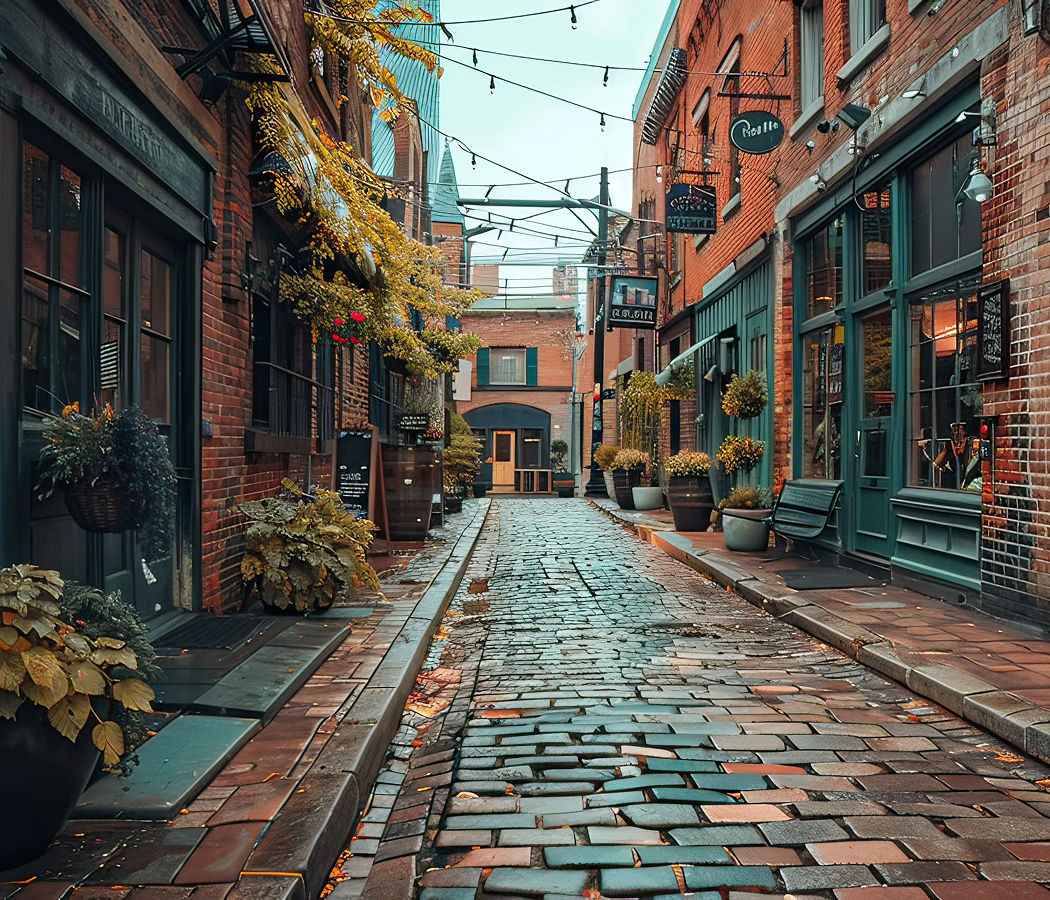
Davisville Avenue is best known for developing across lands formerly owned by John Davis, whose Davisville community emerged during the mid-nineteenth century around one of the earliest permanent settlements north of the Town of York. Expansion accelerated during the 1910s and 1920s following residential subdivision associated with the growth of North Toronto, while improved service from the Toronto Civic Railways and later the Toronto Transportation Commission connected the district more efficiently with Downtown. Builders introduced cohesive collections of Edwardian Classical, Arts and Crafts, Tudor Revival, and Georgian Revival residences distinguished by red brick masonry, limestone trim, decorative brick detailing, leaded-glass windows, broad front porches, and steep gabled rooflines that continue defining the avenue's architectural identity. Planned building setbacks, landscaped boulevards, mature maple canopies, and coordinated residential lot layouts reflected contemporary garden-suburb planning principles while reinforcing Davisville Avenue's reputation as one of Midtown Toronto's most cohesive residential streets. Together, these early settlement patterns, transportation investments, subdivision activity, architectural traditions, and planning principles established Davisville Avenue as a defining corridor within Davisville Village.
Creation of the Village of North Toronto in 1889 and its later annexation by the City of Toronto in 1912 accelerated municipal investment in paved roads, water infrastructure, public lighting, and neighborhood services throughout the surrounding district. Growth of nearby Mount Pleasant Cemetery, established in 1876 by the Toronto General Burying Grounds Trust, influenced the long-term landscape character of Midtown through extensive horticultural planning and one of Canada's most significant collections of memorial sculpture. Ongoing heritage stewardship by the City of Toronto Heritage Preservation Services continues protecting historic residential streetscapes, original masonry, decorative woodwork, period rooflines, and the cohesive visual character that distinguishes Davisville Avenue from later suburban development. Collectively, these municipal milestones, civic investments, landscape initiatives, and preservation efforts demonstrate how Davisville Avenue evolved into one of Midtown Toronto's most enduring residential environments.
How Davisville Avenue fits.
Davisville Avenue works as an exploration of Midtown Toronto's residential heritage, neighborhood parks, and cultural character.
Begin at June Rowlands Park, where landscaped gardens, open greenspace, and seasonal community programming introduce the welcoming character that has long defined Davisville Village while providing a relaxed starting point before exploring the surrounding residential streets. Continue to The Regent Theatre, whose beautifully restored neighborhood cinema reflects the area's longstanding cultural life and adds an intimate architectural dimension that complements the avenue's historic residential setting before leading naturally toward the district's eastern edge. Conclude at Evergreen Brick Works, where restored industrial buildings, environmental restoration projects, and the Don Valley landscape provide the historical and ecological payoff, revealing how the natural geography surrounding Midtown Toronto shaped the communities that later grew around Davisville Avenue. Together, these destinations progress from neighborhood life to cultural character before culminating in the landscape that underpins the area's broader history, creating an outing that fully expresses the character of Davisville Avenue.
Where your story begins.
Foresyte Travel reveals places that feel extraordinary long before you arrive.
Experience premium editorial crafted for luxury travelers.