Why the Hamilton Building matters.
The Hamilton Building is a striking art museum landmark where titanium angles, impossible geometry, and modern cultural ambition reshape the entire Denver skyline around them.
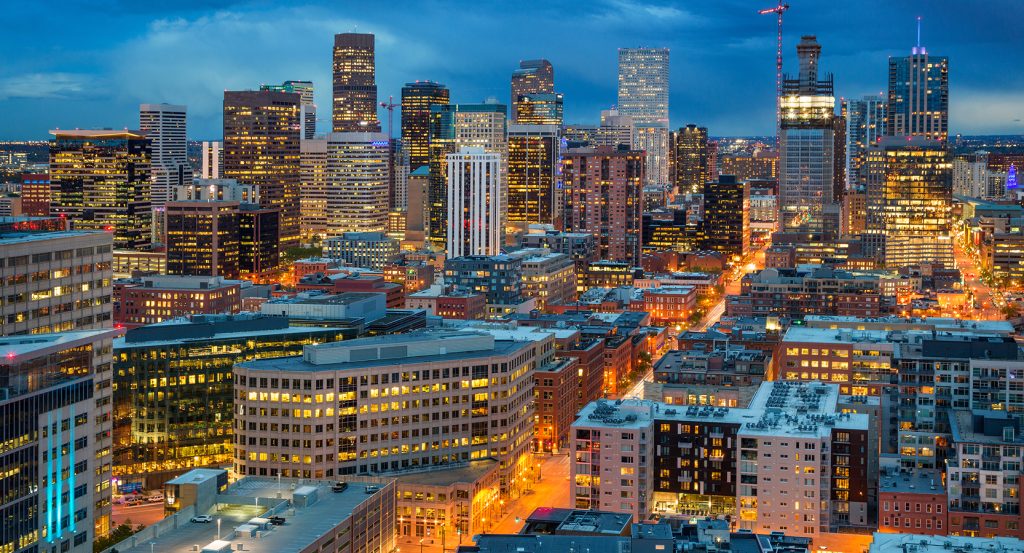
Set along West 13th Avenue near the intersections surrounding Broadway and the Golden Triangle museum district anchored by the Denver Art Museum campus, this world-famous architectural centerpiece pulls artists, tourists, students, and design obsessives into a building that feels less constructed than violently unfolded into existence. The atmosphere shifts long before you even step inside. Sharp metallic planes cut across the sky at impossible angles while light ricochets off titanium surfaces that change color and texture depending on weather, season, and time of day. Nothing about the structure feels passive. The building demands attention through movement, tension, and scale, creating the sensation that the architecture itself is in motion even while standing perfectly still. Outside, Downtown stretches outward beneath government buildings and traffic corridors. Inside, the experience bends toward imagination, abstraction, and visual experimentation.
What defines Hamilton Building.
The Hamilton Building became one of the most important pieces of modern architecture in the American West, designed by internationally renowned architect Daniel Libeskind as an expansion of the Denver Art Museum.
Opened in 2006, the building immediately transformed Denver's cultural character through its radically unconventional form, a collision of sharp lines, tilted walls, geometric fragmentation, and titanium-clad surfaces inspired partly by the Rocky Mountains and the crystalline geology of the region itself. Libeskind intentionally rejected traditional museum symmetry in favor of movement and resonant tension, creating interior spaces that shift perspective as visitors move through them. The result feels immersive. Galleries open unexpectedly, ceilings tilt overhead, and stairways pull visitors through the building almost like narrative sequences inside a film. What makes the Hamilton Building especially significant is that it helped announce Denver as a serious international design and arts city rather than simply a gateway to the mountains.
How Hamilton Building fits.
The Hamilton Building works as the kind of cultural experience that completely reorients how you visually understand the city around you afterward.
Come earlier in the day when sunlight strikes the titanium exterior most dramatically and the surrounding museum district still carries a quieter contemplative energy. Spend time walking fully around the building before entering. The architecture reveals itself differently from every angle, sharp and almost aggressive from one corner, strangely fluid and sculptural from another. Once inside, move slowly through the galleries instead of rushing floor to floor mechanically. The building itself is part of the exhibition. Pay attention to how light changes between rooms, how walls tilt and open unexpectedly, and how the architecture manipulates scale, emotion, and perspective beneath your feet. Afterward, wander the broader Golden Triangle district where museums, public art, and civic buildings continue the same cultural rhythm beyond the museum walls. By the time you step back onto 13th Avenue, Denver will feel more ambitious, more artistic, and infinitely more architecturally alive than it did before you arrived.
Where your story begins.
Foresyte Travel reveals places that feel extraordinary long before you arrive.
Enjoy editorial crafted for luxury travelers.
Foresyte may earn a commission when you book.