Why Soldiers' Monument matters.
Standing at the center of the Santa Fe Plaza, the Soldiers' Monument Obelisk is among the city's most talked-about landmarks, a relic of the past that still anchors the civic heart of New Mexico's capital.
Rising from the brickwork like a silent sentinel, the sandstone obelisk has watched over centuries of gatherings, from markets and parades to vigils and protests. Its weathered surface tells a story that is equal parts pride and reckoning, etched with the complexities of New Mexico's history. Originally erected in the 1860s to honor Union soldiers who died in the Civil War, the monument became a mirror of shifting values, standing witness to Santa Fe's evolution from frontier settlement to modern multicultural city. Around it, the Plaza continues to hum, artists selling turquoise jewelry, children chasing pigeons, mariachi bands tuning up for evening concerts. Yet amid the life and color, the obelisk's quiet presence invites reflection: a reminder that even in a place as energetic as Santa Fe, history is never still.
What defines Soldiers' Monument.
The obelisk has long been a focal point of Santa Fe's public memory, and of its public debate.
Commissioned in 1867 by territorial governor William Pile, it was built from locally quarried stone to commemorate Union soldiers and New Mexican volunteers who fought against Confederate incursions during the Civil War. An inscription on one side, later deemed offensive, referred to “savage Indians,” sparking decades of criticism and efforts to re-contextualize the monument's meaning. By the 1970s, the obelisk had already become a flashpoint for conversations about colonization, Indigenous rights, and the language of remembrance. In 2020, amid nationwide reckonings with monuments and history, the structure was damaged and later removed for safety and restoration, leaving only its base on the Plaza. Today, the site remains open, a space of dialogue. The City of Santa Fe and local tribal nations have since collaborated on public forums to determine how best to interpret the monument's story in a way that acknowledges both the region's complex heritage and its living cultures. Few visitors realize that the stones around the site mark centuries of transformation, from the Spanish colonial presidio walls to the thriving crossroads of trade and art that defines the Plaza today.
How Soldiers' Monument fits.
Visiting the monument site is less about sightseeing and more about connecting with the evolving narrative of Santa Fe itself.
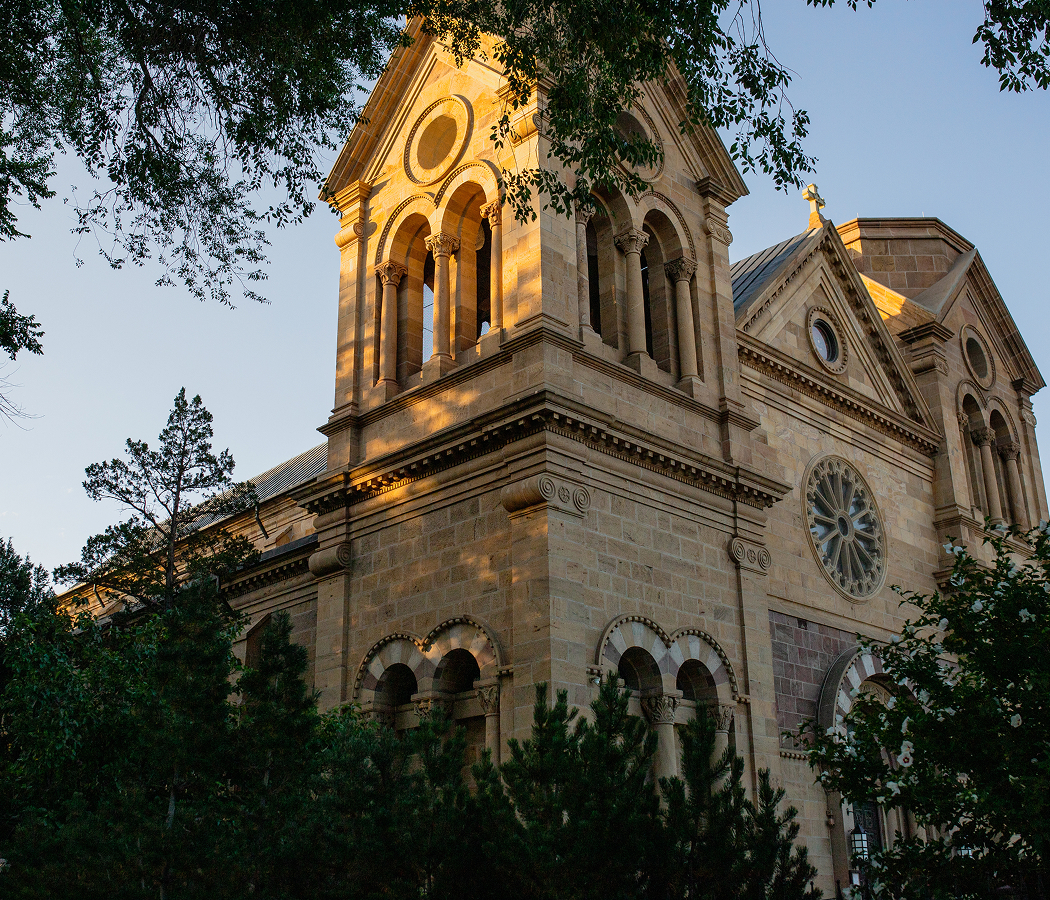
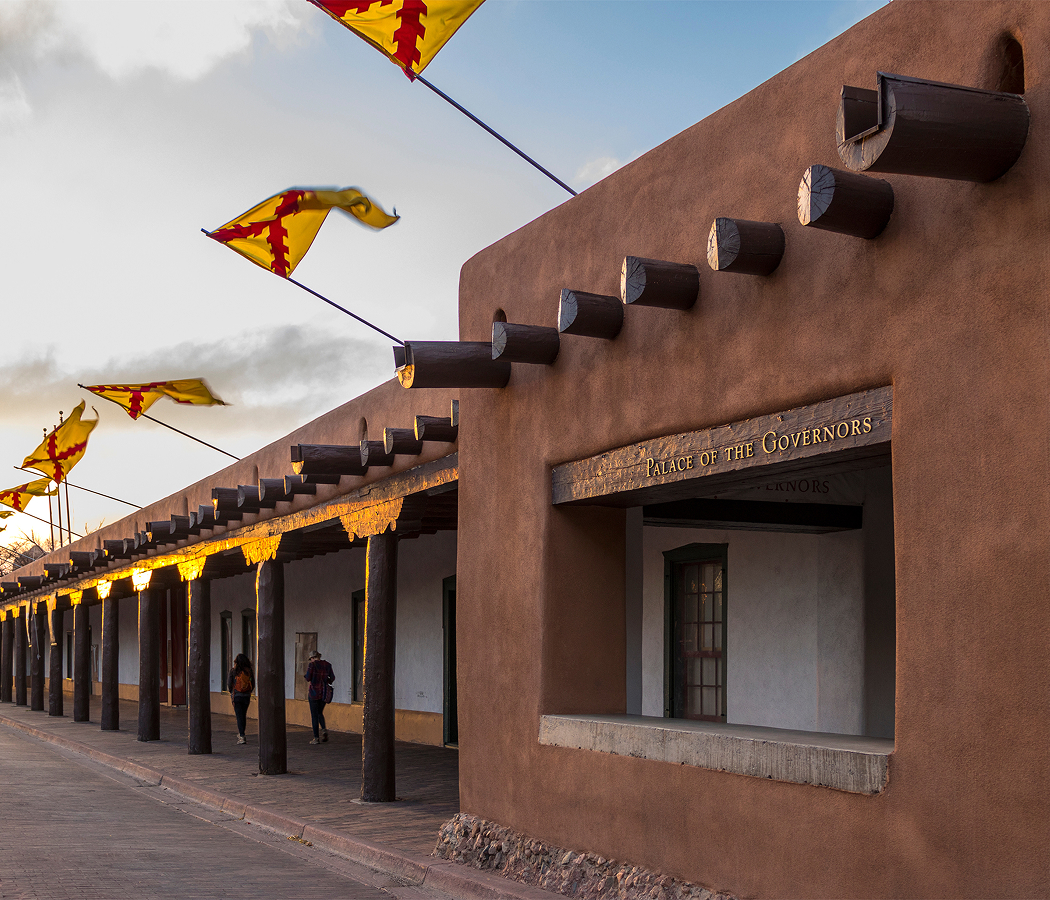
When you walk through the Plaza, pause at the circular foundation where the obelisk once stood. Read the interpretive plaques placed nearby, they outline the monument's origins and the city's ongoing discussions about reconciliation and public memory. Look outward from the center: the Palace of the Governors to one side, the Cathedral Basilica of St. Francis of Assisi rising in the distance, together framing four centuries of faith, power, and cultural exchange. Come during the early morning, before the Plaza fills, to hear the soft echo of footsteps across the bricks and imagine the ceremonies once held here. Or visit at sunset, when golden light spills across the empty pedestal, transforming absence into invitation. The Soldiers' Monument Obelisk Site may no longer bear its full structure, but its spirit remains, a space where Santa Fe continues to ask itself how to honor the past while shaping the story of what comes next.
Where your story begins.
Foresyte Travel reveals places that feel extraordinary long before you arrive.
Enjoy editorial crafted for luxury travelers.
Foresyte may earn a commission when you book.