
Why Sweet Basil matters.
Sweet Basil is a MICHELIN Guide-recognized American restaurant where Vail Village's Alpine dining tradition meets nearly five decades of culinary innovation, an influential succession of Colorado chefs and the evolution of mountain-resort cooking from European classics to globally inspired contemporary cuisine.
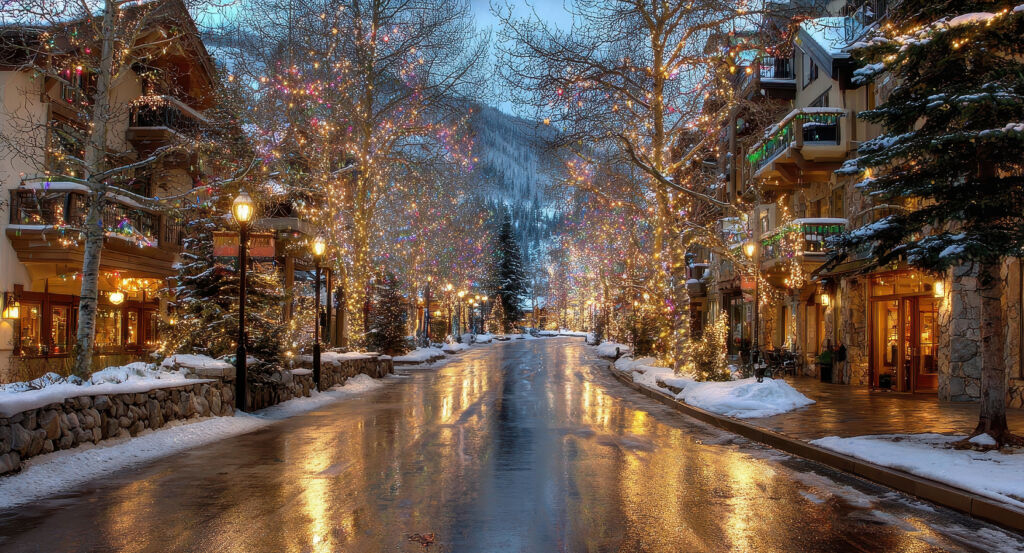
Set along Gore Creek Drive near Bridge Street and a short walk from the Covered Bridge, the restaurant occupies an upper-level dining space in Vail Village's pedestrian commercial district, overlooking the historic streets and mountain architecture surrounding the Gore Creek corridor. Large windows connect the principal dining room with the village's pedestrian activity, and an enclosed glass wine room forms a prominent interior feature. Contemporary furnishings, carefully arranged tables and an open bar establish a dining environment suited to both formal meals and informal gatherings. The restaurant's position above the lower commercial level places it within a concentrated district of shops, galleries and mountain dining establishments. The result is a longstanding culinary institution whose intimate village setting, architectural evolution and central location preserve its connection with Vail's development as an international mountain destination.
What defines Sweet Basil.
Sweet Basil is best known for its founding by Kevin Clair in June 1977, its influential succession of chefs and its development into one of Colorado's enduring independent restaurants, recognized by the MICHELIN Guide beginning in 2023. Clair opened the original 47-seat establishment on Gore Creek Drive, then considered a secondary commercial street beyond Vail's principal pedestrian corridor. His culinary training included experience in French restaurants holding the highest MICHELIN distinction, introducing classical European techniques to a young American ski community. Early menus featured Monte Cristo sandwiches, omelets and boeuf bourguignon, with complete dinner preparations priced at $5.95. The restaurant's first substantial expansion occurred in 1984, when its kitchen relocated upstairs and additional dining capacity was created. David Walford became executive chef in 1985, beginning a succession of culinary leaders whose subsequent careers influenced restaurants throughout the region. Matt Morgan joined the staff as a busboy in 1987, beginning a professional ascent that eventually placed him in ownership. Fletcher Macniel designed the restaurant's enduring emblem on a bar napkin in 1988, drawing inspiration from competitive ski racing. Walford introduced saffron angel-hair pasta in 1989, establishing a signature preparation subsequently adapted by successive chefs with scallops, shrimp and lobster. Thomas Salamunovich arrived from San Francisco in 1994, later establishing Larkspur in Beaver Creek and contributing to the development of the Larkburger restaurant group. Morgan became managing partner alongside Clair in 1998, followed by Bruce Yim's promotion to executive chef in 1999. Paul Anders assumed kitchen leadership in 2006 after working at Denver's Brown Palace, introducing broader Asian influences and an increasing emphasis on seasonal ingredients. Morgan and Clair established Mountain Standard on the building's lower level in 2012, extending their restaurant operations into wood-fired cooking and shared dishes. Anders became a chef-partner in 2014, and Morgan acquired Clair's remaining ownership interest in 2017. Jessenia Sanabria joined the ownership group as managing partner of operations in 2023, following a career progressing through the restaurant's bar and management positions. MICHELIN recognition followed that year, with a further distinction for exceptional cocktails in 2024. Will Edwards became executive chef overseeing both restaurants in 2025, continuing the succession of culinary leadership that has shaped the establishment across generations.
Will Edwards' culinary direction combines contemporary American cooking with Asian ingredients, French techniques and the seasonal produce available to Colorado mountain restaurants. Chef de cuisine Isreal Delgado directs the preparation of individual dishes, coordinating the kitchen's changing selection of seafood, meat and vegetable preparations. Tempura-fried mahi mahi tacos combine crisp battered fish with peanut salsa macha, introducing Mexican chile preparations and nut-based richness to a Japanese-derived frying technique. Bone marrow pho with scallop incorporates the concentrated richness of roasted marrow into the aromatic broth associated with Vietnamese cooking. Miso and black garlic glaze provides fermented depth to halibut, accompanied by fondant potatoes prepared through classical French roasting and stock reduction. The contrast between the fish's delicate flesh, savory glaze and butter-enriched potatoes demonstrates the kitchen's combination of established techniques across culinary traditions. The restaurant's historical saffron pasta continues as a recurring preparation, preserving a direct connection with its earlier European-influenced menus. Desserts extend the international approach through preparations incorporating tropical fruit, pastry and contrasting textures. A piña colada-inspired dessert combines caramelized pineapple compote, passion fruit pâte de fruit and coconut crumble, translating a familiar cocktail into a composed pastry course. The bar program develops seasonal cocktails through carefully measured spirits, house preparations and changing aromatic ingredients. Champagne, Chardonnay, Riesling, Pinot Noir and Cabernet Sauvignon form important components of the wine selection, with European and American producers represented across different styles. The glass-enclosed wine room provides visible storage within the dining area, placing the cellar at the center of the restaurant's interior arrangement. The Elegance at Elevation tasting menu, introduced in 2024, extends the kitchen's work into a structured sequence of smaller preparations. Lunch, afternoon service and dinner accommodate different dining occasions, preserving the restaurant's longstanding relationship with the changing daily schedule of a mountain resort.
How Sweet Basil fits.
Sweet Basil works as the culinary centerpiece for a Vail Village itinerary connecting Colorado's military skiing heritage, the conservation of high-elevation botanical environments and the performing arts institutions that expanded the community's cultural significance beyond winter recreation.
Begin at Colorado Snowsports Museum, situated beside Vail Village's principal parking structure near South Frontage Road. Its collections preserve skis, snowboards, uniforms, photographs and equipment associated with the development of winter sports throughout Colorado. Exhibitions examine the United States Army's 10th Mountain Division, whose soldiers trained at Camp Hale before serving in Italy during World War II. Military equipment and historical displays connect the division's specialized mountain training with the subsequent development of American skiing. The Colorado Snowsports Hall of Fame recognizes athletes, instructors, equipment innovators and industry figures whose achievements shaped the state's winter sports institutions. Continue to Betty Ford Alpine Gardens, situated within Ford Park east of the village center. Founded in 1985 and named for former First Lady Betty Ford, the gardens cultivate alpine plants from mountainous environments across the world. Their botanical collections demonstrate adaptations to short growing seasons, intense ultraviolet exposure and challenging mountain soils. Rock gardens, waterfalls and carefully arranged planting beds provide access to species associated with different elevations and geographical regions. Educational exhibits examine alpine ecology and the conservation challenges affecting fragile mountain environments. Conclude at Gerald R. Ford Amphitheater, the outdoor performing arts venue situated beside the gardens in Ford Park. Opened in 1987 and named for President Gerald Ford, the amphitheater became an important center for Vail's summer cultural programming. Its covered stage, terraced seating and landscaped lawn accommodate orchestral performances, dance productions and community events against a mountain backdrop. The venue hosts performances associated with Bravo! Vail and the Vail Dance Festival, connecting the resort community with internationally recognized musicians and dance companies. The progression moves from Colorado's skiing history through the conservation of alpine plant life and culminates in the performing arts institutions that established Vail's year-round cultural significance.
Where your story begins.
Foresyte Travel reveals places that feel extraordinary long before you arrive.
Enjoy editorial crafted for luxury travelers.
Foresyte may earn a commission when you book.


























































































































